
A new breed of practitioner — the Forward Deployed Engineer — is embedding AI specialists directly inside client organizations, quietly displacing the traditional IT consulting model that enterprises have relied on for decades.
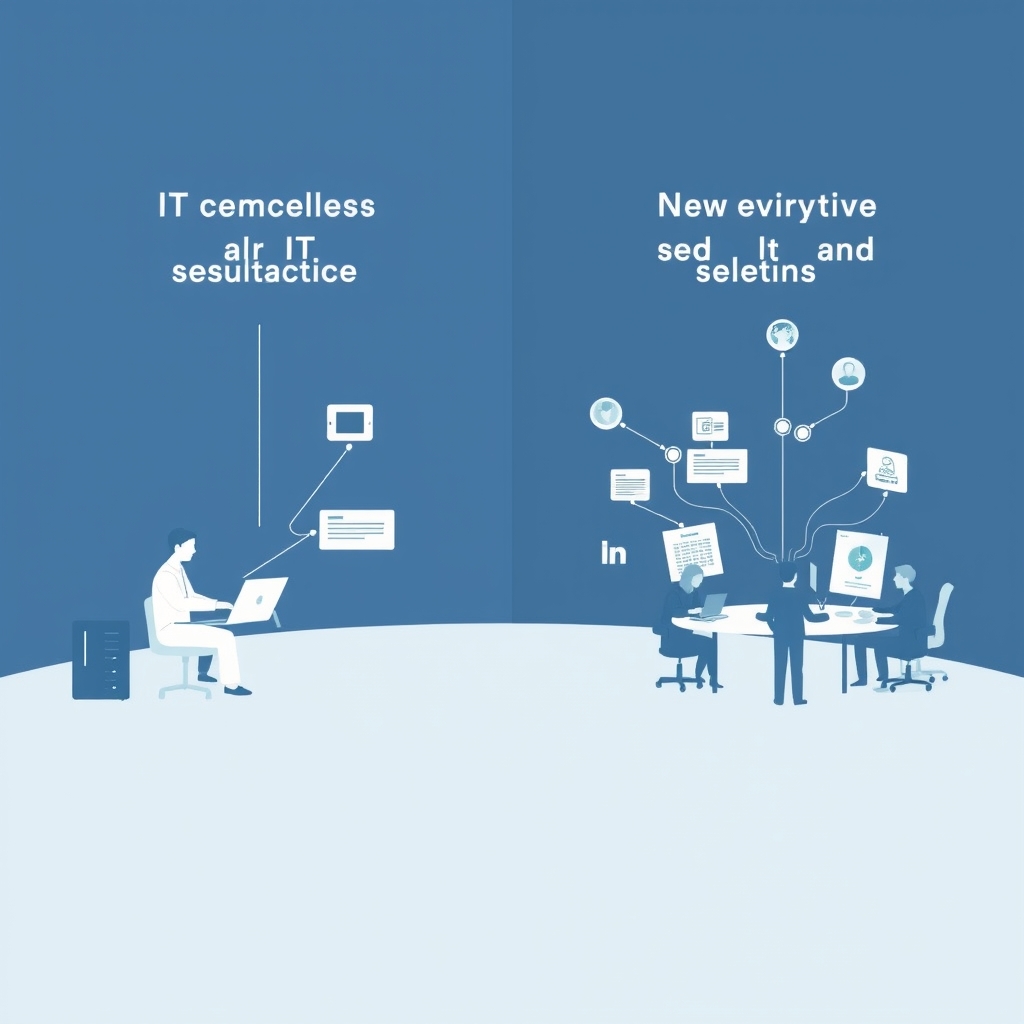
For decades, if an enterprise wanted to modernize its operations, the play was familiar: hire a consulting firm, receive a team of generalist advisors, and wait for a slide deck full of recommendations. That model is being disrupted — not by a better consulting firm, but by a fundamentally different kind of practitioner: the Forward Deployed Engineer (FDE).
What Is a Forward Deployed Engineer?
The FDE model emerged from software companies that discovered their most complex clients needed more than a sales engineer or an implementation partner — they needed builders embedded directly inside the client's environment. Instead of handing off a product and writing documentation, you place a senior technical person inside the client organization to build, iterate, and integrate in real time.
Palantir is widely credited with formalizing the FDE role at scale, deploying engineers alongside government agencies and large enterprises to implement and customize data platforms on-site. The results — faster deployment, tighter feedback loops, and genuine institutional knowledge transfer — proved the concept.
Now, with AI becoming the dominant technology investment priority across industries, a new wave of tech companies is adopting the same playbook. Today's FDE isn't just implementing software — they're building AI pipelines, fine-tuning models on proprietary data, and standing up governance frameworks that barely existed three years ago.
The Collapse of the Old IT Consulting Model
Traditional IT consulting was built for a world where technology moved slowly enough that a generalist with project management chops and domain knowledge could add value. That world is fading fast.
The data is hard to ignore. Tech job postings are down 36% from their pre-pandemic levels as of mid-2025, according to Indeed Hiring Lab — but the contraction is concentrated in generalist roles. Software engineer postings alone have dropped 49%. Meanwhile, jobs directly tied to AI — machine learning engineers, NLP engineers, AI governance specialists — are among the few categories still above 2020 posting levels.
A 2025 report from the Cisco-led AI Workforce Consortium found that 78% of ICT roles now include AI technical skills as a requirement, and seven of the ten fastest-growing ICT roles are AI-related. Hiring managers aren't looking for people who understand technology in the abstract; they're looking for people who can build and operate AI systems under real-world production constraints.
Consulting firms were never optimized to produce that kind of talent — and they know it. The FDE model, by contrast, is built around exactly that profile: a senior engineer who can arrive at a client site, assess the existing stack, and start building on day one.
The Talent Profile Behind the FDE
Understanding why the FDE is displacing the traditional consultant also requires understanding a dramatic inversion in the engineering talent market itself.
In 2022, roughly 60% of engineering hire requests came in for mid-level developers and 30% for seniors. By 2024, those figures had flipped: 25% mid-level, 65% senior, with AI specialists making up the remaining 10%, according to staffing market research from Second Talent. The demand isn't just for seniority — it's for a specific combination of senior engineering judgment and hands-on AI fluency.
BLS data shows that overall programmer employment fell 27.5% between 2023 and 2025, a trend accelerated by generative AI tools automating entry-level coding work. Hugo Malan, president of the science, engineering, technology, and telecom unit at Kelly Services, called it "a tectonic shift." What's left after that shift is a thinner but more capable workforce — precisely the profile FDE roles demand.
Generative AI job postings surged 170% year-over-year from January 2024 to January 2025, per Indeed's Hiring Lab AI At Work Report, even as the broader tech market contracted. Much of that growth is being driven by enterprise demand for embedded AI expertise — the FDE use case. Demand for AI governance skills is up 150% and AI ethics skills up 125%, reflecting the fact that deploying AI inside a client environment isn't just a software problem: FDEs increasingly need to navigate compliance, model risk, and regulatory exposure alongside the technical build.
What This Means for Hiring Teams
For hiring managers, the FDE model creates a sourcing challenge that traditional job boards and generalist staffing firms aren't designed to solve. You're not looking for someone who has passed an AI certification exam. You're looking for someone who has shipped production AI systems, can communicate clearly with non-technical stakeholders, and can operate independently inside an unfamiliar client environment.
That combination — senior, AI-fluent, client-ready — is genuinely scarce. Robert Half's survey found 87% of tech leaders report difficulty finding skilled workers, and 45% of hiring managers cite a lack of qualified applicants as their top challenge (per Indeed). In the FDE market specifically, that gap is even more pronounced.
The staffing industry is adapting to this reality the same way the consulting industry is: firms that can identify, vet, and place engineers with that specific profile — rather than just match resumes to keyword lists — are the ones that will deliver real value as enterprises move from AI experimentation into full-scale deployment. It's precisely the kind of market shift that purpose-built AI engineering staffing firms like Ryzlink exist to address.

Comments
No comments yet — be the first to share your thoughts.